
Your backyard deserves more than just grass and a few chairs. A well-designed concrete patio transforms unused outdoor space into a functional extension of your home—a place where summer evenings linger and weekend mornings begin with coffee in hand.
The challenge? Choosing the right style when you’re staring at dozens of options and trying to envision what works for your specific space.
A patio that complements your neighbor’s Craftsman bungalow might clash with your modern ranch. Budget considerations matter. Maintenance requirements factor in. Long-term durability determines whether you’re making an investment or just spending money.
Here’s what most homeowners discover too late: The difference between a patio you’ll love for decades and one you’ll regret isn’t just about picking pretty pictures from Pinterest. It’s about understanding how different concrete styles perform in Northern California’s climate, how design choices affect functionality, and which options deliver lasting value for your investment.
Why Concrete Remains the Smart Choice
Before diving into specific styles, let’s address the fundamental question: why concrete?
Material matters more than most people realize. While pavers offer flexibility and natural stone provides undeniable elegance, concrete delivers unmatched versatility at a practical price point. Modern concrete techniques have evolved far beyond the plain gray slabs of previous decades.
Today’s options rival high-end materials in appearance while maintaining concrete’s inherent advantages:
- Exceptional durability — Properly installed concrete patios withstand Northern California’s temperature fluctuations
- Minimal maintenance — Unlike wood that rots or pavers that shift and settle, quality concrete becomes a permanent feature
- Cost efficiency — Square foot for square foot, concrete typically costs 30-50% less than comparable paver installations
- Design versatility — From rustic to modern, concrete adapts to any aesthetic vision
The cost equation makes particular sense for homeowners working within realistic budgets. This difference allows for larger outdoor living areas or leaves room to invest in other landscape elements.
Stamped Concrete Patio Ideas That Make an Impact
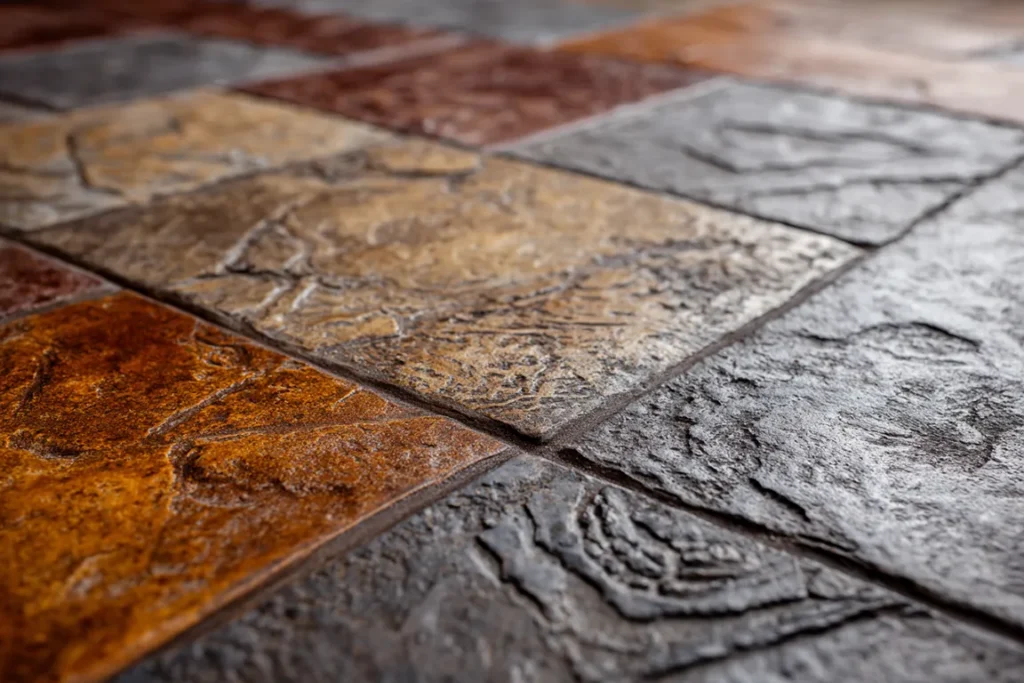
Stamped concrete has revolutionized what’s possible with poured surfaces. This technique uses specialized stamps to imprint patterns and textures into freshly poured concrete, creating the appearance of natural stone, brick, or tile at a fraction of the cost.
The Slate Pattern
This remains one of the most popular choices for good reason. It mimics the organic, irregular shapes of natural flagstone while eliminating the uneven surfaces that make flagstone challenging for furniture placement. The random pattern creates visual interest without overwhelming smaller spaces, and the texture provides subtle slip resistance around pool areas or where water runoff occurs.
Wood Plank Stamping
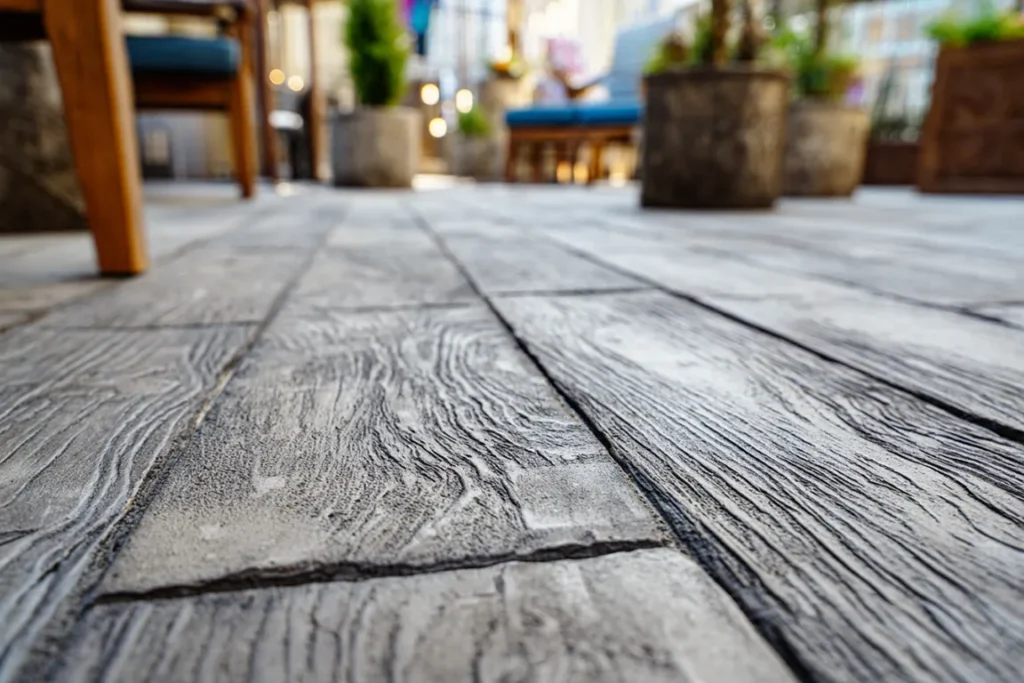
Looking for a rustic or cabin aesthetic? Wood plank stamping replicates weathered wood grain and board spacing with remarkable accuracy. Unlike actual wood decking that requires annual sealing and eventual replacement, stamped wood-look concrete maintains its appearance indefinitely.
Consider this option for patios that connect to natural landscapes or properties with existing wood features.
Cobblestone and Brick Patterns
These classic designs complement traditional architecture beautifully. Perfect for older homes and historic neighborhoods where authentic materials might be cost-prohibitive or impractical.
Popular arrangements include:
- Running bond brick pattern for timeless appeal
- Fan layouts for formal outdoor entertaining areas
- Herringbone arrangements that add sophisticated detail
Color Makes the Difference
Most stamped work incorporates integral color mixed into the concrete itself, then enhanced with secondary color hardeners applied to the surface. This two-tone approach creates depth and dimension that mimics natural materials.
Earth tones—tans, browns, and grays—remain popular for their ability to complement most home exteriors and landscape colors.
Poured Concrete Patio Ideas for Clean, Modern Aesthetics
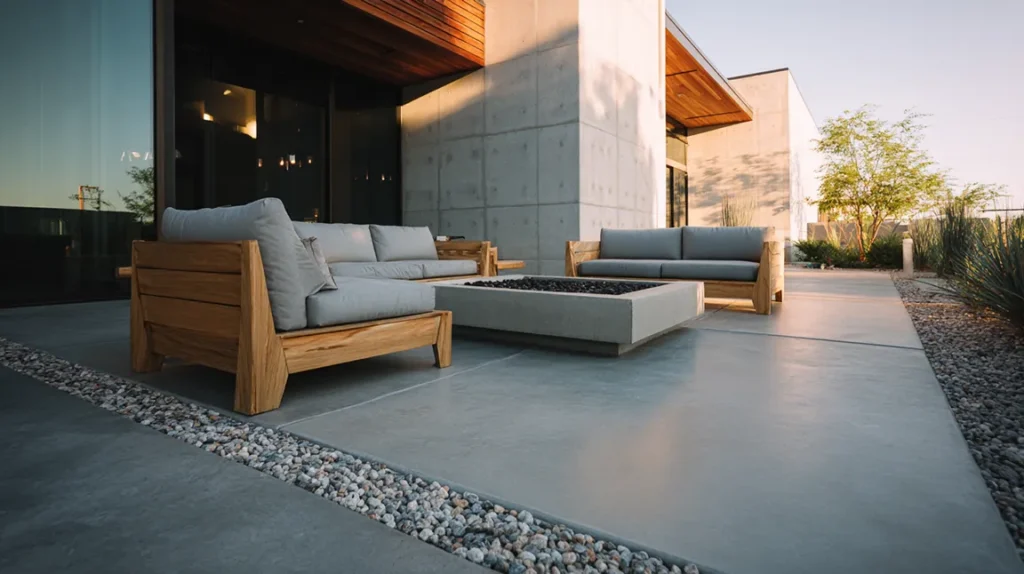
Sometimes simplicity speaks loudest. Poured concrete patios with smooth, minimalist finishes have surged in popularity as modern architecture dominates new construction and renovation projects.
Smooth Trowel Finish
This approach embraces concrete’s inherent character rather than attempting to disguise it. The smooth surface reflects light beautifully, making it ideal for shaded areas that benefit from brightness. Large format pours with minimal joints create expansive, uninterrupted planes that complement modern architectural lines.
Exposed Aggregate
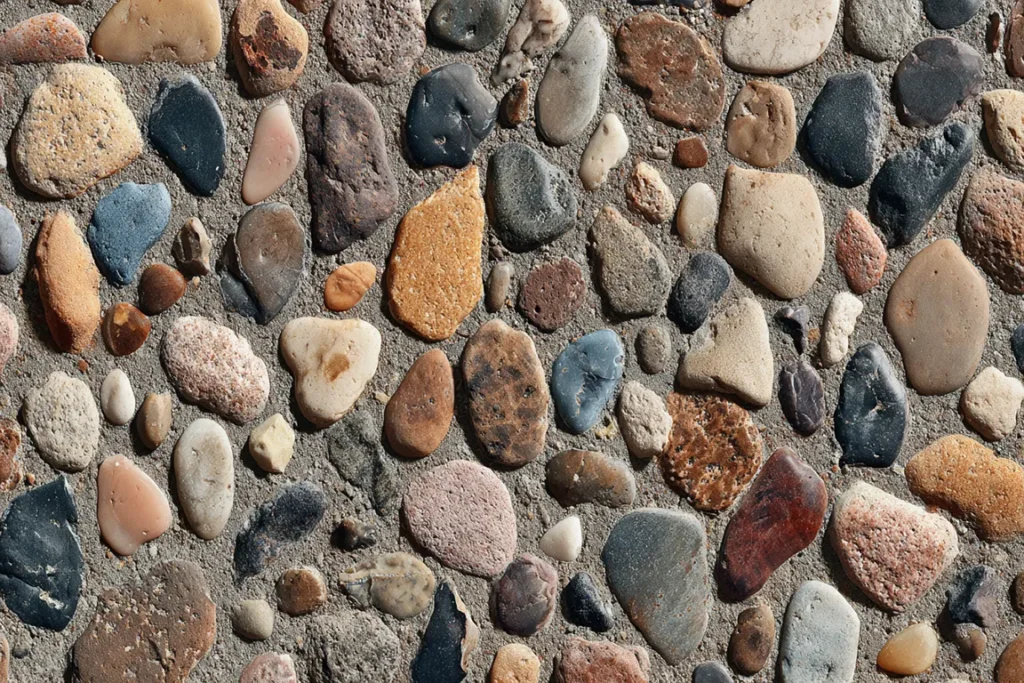
By removing the top layer of cement paste to reveal the stone aggregate beneath, this finish provides both visual interest and natural slip resistance. The technique works particularly well for modern designs because the organic nature of the exposed stone creates contrast against clean architectural lines.
Choose aggregate colors that complement your home’s exterior:
- Crushed granite for warm tones
- River rock for cooler palettes
- Pea gravel for subtle texture
Geometric Scoring
Saw-cut lines create intentional patterns—grids, diagonals, or custom designs—that add visual structure without the cost of stamping. The scored lines also serve a practical purpose by controlling where natural stress cracks might occur, directing them along planned joints rather than randomly across the surface.
Polished Concrete
This represents the premium end of modern poured options. Multiple grinding and polishing steps create a smooth, reflective surface with depth and luster.
While more common in commercial applications, polished concrete patios make bold statements in residential settings. The technique works best in covered or partially covered areas where the refined finish receives protection from weather extremes.
Concrete Patio Ideas on a Budget Without Sacrificing Quality
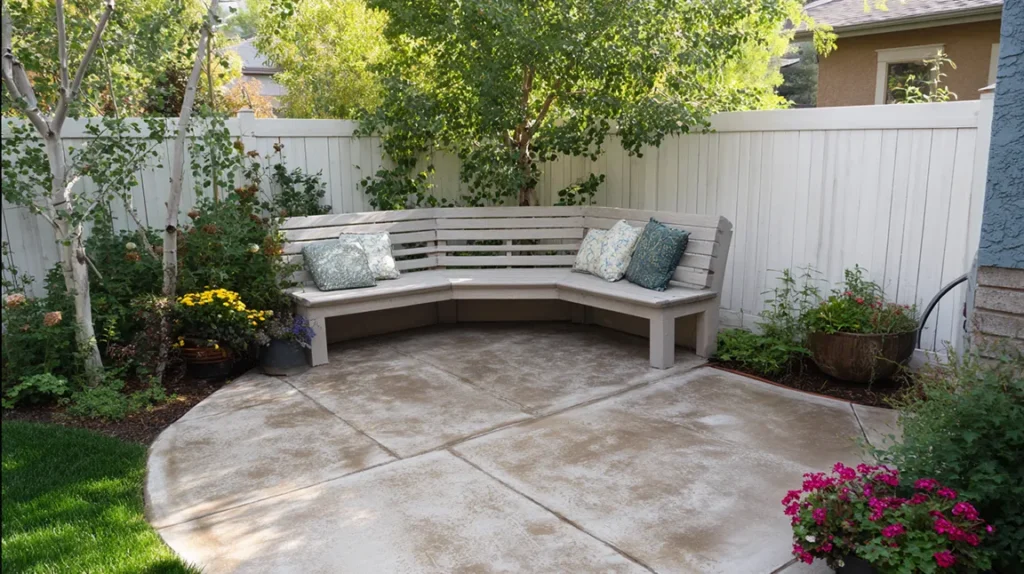
Budget constraints don’t mean settling for boring. Smart design choices and strategic planning create attractive patios that respect financial limits while delivering lasting value.
Standard Broom Finish
This offers the most economical option. The classic texture—created by dragging a broom across wet concrete—provides slip resistance and subtle visual interest at the lowest cost per square foot.
The key to making broom finish work aesthetically? Focus on the details. Clean lines, proper proportions, and thoughtful integration with surrounding landscape elements elevate simple concrete beyond “budget basic.”
Phase Your Construction
Install the primary patio area now and plan for future extensions. This approach spreads costs across multiple seasons while allowing you to live with the initial space and refine plans for additions.
Design the initial phase with expansion in mind:
- Proper base preparation that extends beyond current pour
- Planned joint locations for future connections
- Drainage that accommodates larger finished area
Transform with Staining
Staining transforms existing or new concrete economically. Acid stains react with concrete’s natural minerals to create permanent, variegated color that won’t peel or fade. Water-based stains offer more color options at lower cost, though with slightly less durability.
A simple stain application over broom finish concrete costs significantly less than stamped or decorative options while dramatically improving appearance.
Reduce Size Strategically
An 800-square-foot stamped patio might exceed budget, but a 500-square-foot space designed efficiently accommodates entertaining needs while allowing room for surrounding landscape elements that extend the outdoor living area visually.
Add Premium Border Treatments
Pour the main patio in standard broom finish, then add a stamped or stained border around the perimeter. This technique draws attention to the design elements while keeping the overall project budget-friendly.
Simple Concrete Patio Ideas That Work for Every Home
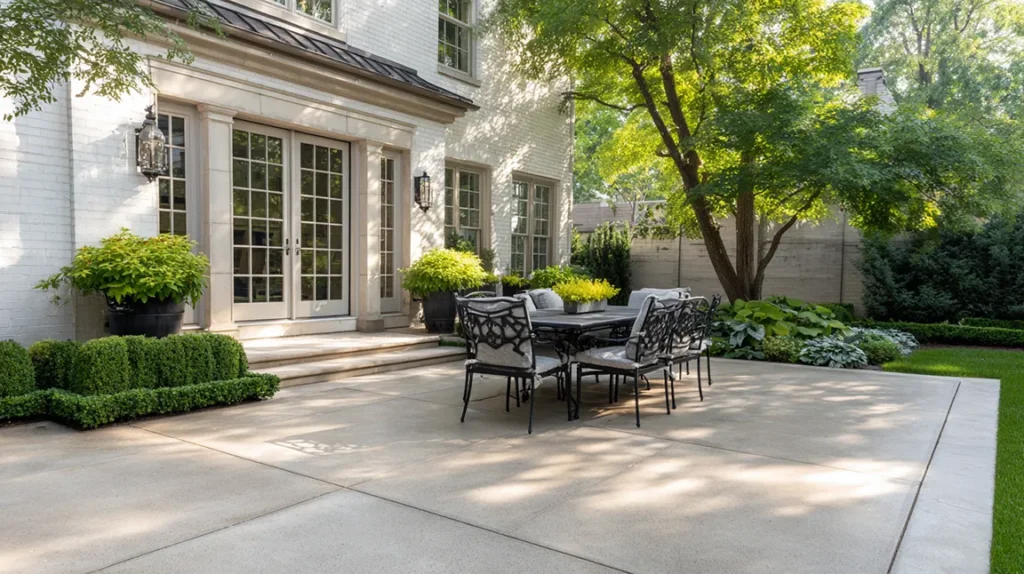
Not every space requires elaborate design. Sometimes straightforward solutions prove most successful, particularly for homeowners who prioritize function over flash or prefer letting landscape plantings take center stage.
The Classic Rectangle
Straight lines and right angles create crisp, clean spaces that work with any architectural style. This simple geometry makes estimating costs straightforward, simplifies the construction process, and creates versatile spaces for furniture arrangement.
The rectangle works particularly well for:
- Narrow side yards
- Transitional spaces connecting different outdoor areas
- Properties where landscape elements should be the focal point
Circular or Curved Patios
These soften landscapes and create intimate gathering spaces. A simple circle provides natural traffic flow and works beautifully in gardens where organic shapes dominate. The curve requires more skill during installation but not significantly more material, keeping costs reasonable while adding visual softness that contrasts with home architecture’s typically straight lines.
Multi-Level Simple Designs
Two connected rectangular sections at different heights create defined spaces for different activities—dining at one level, lounging at another. The elevation change requires additional excavation and forming but uses standard techniques that keep labor costs reasonable.
Integration with Existing Hardscape
Extend concrete patios from existing driveways or walkways using matching finishes. This approach creates continuity throughout your property and often reduces overall costs by sharing edge work and base preparation.
Small Concrete Patio Ideas That Maximize Limited Space
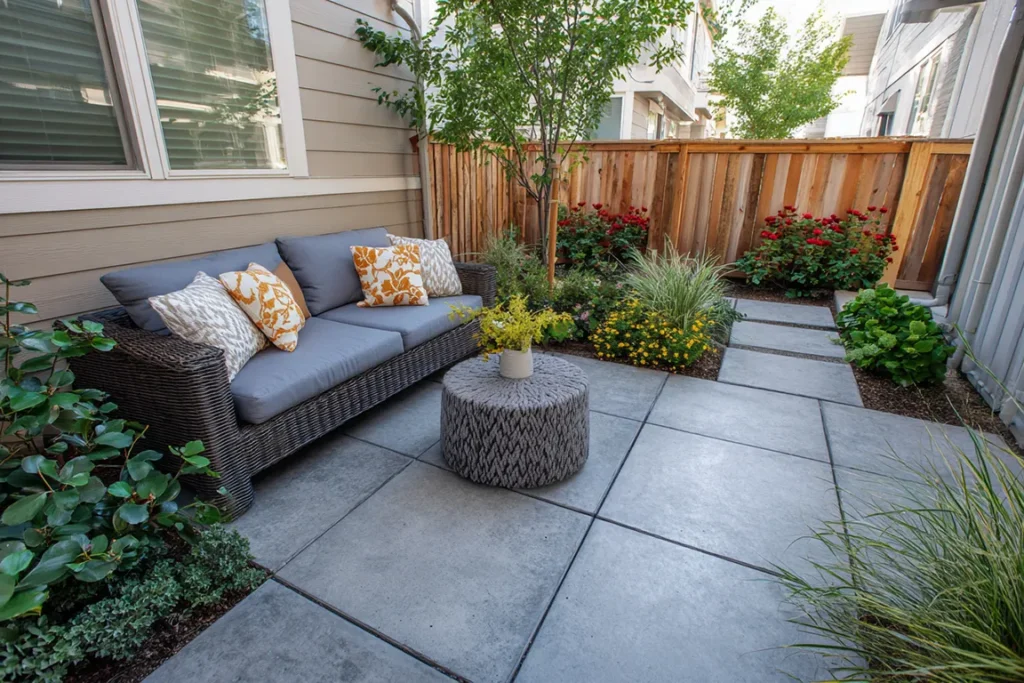
Square footage limitations demand strategic thinking. Small patios require careful planning to balance functionality, aesthetics, and the illusion of spaciousness.
Use Diagonal Layouts
Diagonal layouts visually expand small spaces by drawing the eye along the longest possible sight line. Orient a rectangular patio at 45 degrees to the house rather than parallel with the walls. This seemingly minor adjustment changes perception dramatically, making spaces feel larger than their actual dimensions.
Incorporate Built-In Seating
Low concrete walls around the patio perimeter provide both seating and visual definition. Top these walls with comfortable cushions for functionality. The permanent seating frees up the patio surface for a small table or open circulation space—no bulky furniture needed.
Create Seamless Transitions
In small yards, hard definitions between different areas make spaces feel cramped. Instead, let concrete flow naturally into adjacent areas—extend slightly into lawn edges or wrap around garden beds. These soft edges make the patio feel like part of a larger whole rather than a confined square.
Think Vertically
Pair your small concrete patio with tall plantings, wall-mounted features, or overhead structures. When sight lines lift skyward, floor space limitations matter less.
Choose Light Colors
Light gray or tan concrete colors work better for small patios than dark browns or charcoals. The lighter palette makes spaces feel open and bright, particularly in partially shaded locations.
Modern Concrete Patio Ideas for Contemporary Homes
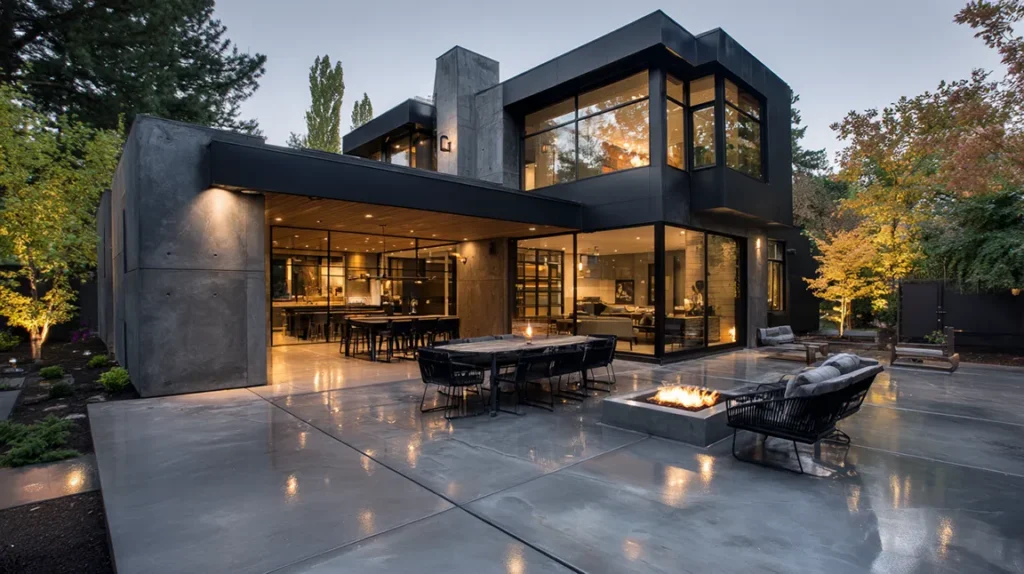
Modern architecture demands patio designs that complement clean lines, minimal ornamentation, and intentional material palettes. Concrete’s versatility makes it ideal for contemporary aesthetic requirements.
Monolithic Slabs with Minimal Joints
Large-format pours create uninterrupted surfaces that emphasize spaciousness and simplicity. Control joints become design elements themselves when spaced intentionally and filled with contrasting materials—thin strips of dark grout or metal dividers—that add subtle detail without disrupting the overall clean aesthetic.
Concrete and Wood Combinations
Alternate strips of smooth concrete and sustainably sourced hardwood decking to create dynamic surfaces. This adds visual texture while maintaining contemporary sensibility. The technique works particularly well for larger patios where monotonous surfaces might feel sterile.
Floating Concrete Pads
Rather than traditional slabs at grade, elevated platforms supported by hidden structural elements appear to hover above the landscape. This approach requires engineering expertise but delivers dramatic contemporary appeal.
Color-Blocked Sections
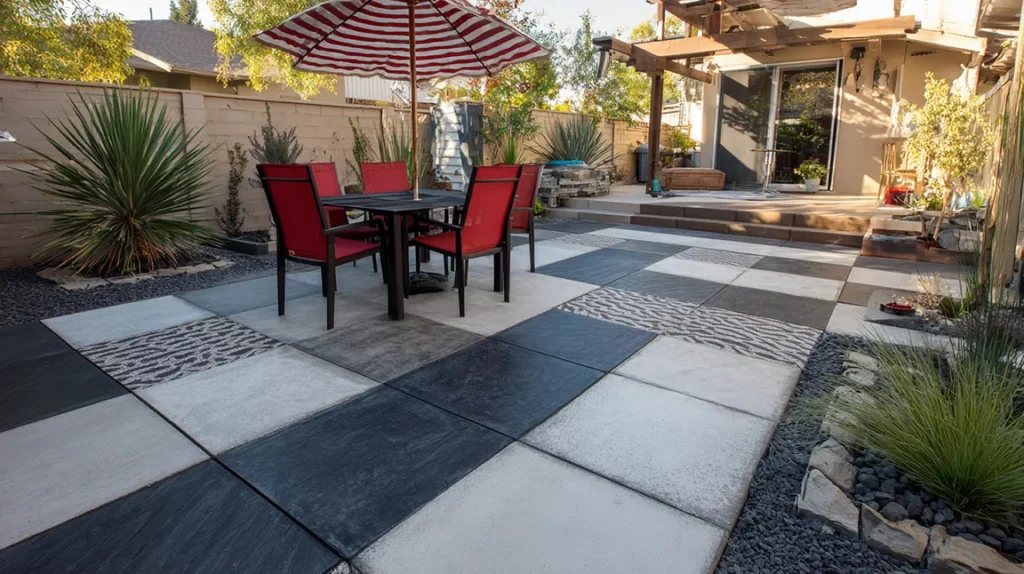
Pour adjacent sections in contrasting colors for modern artistic effects:
- Light gray beside darker charcoal
- Neutral tones accented with bold terracotta
- Black and white for stark contemporary statements
The sharp color transitions become design features that add interest without traditional pattern work.
Complete the Look
Pair concrete patios with steel planters, crushed stone groundcover, and architectural plants like ornamental grasses and sculptural succulents. The cohesive material palette reinforces modern design intentions.
Concrete Patio Extension Ideas for Expanding Outdoor Living
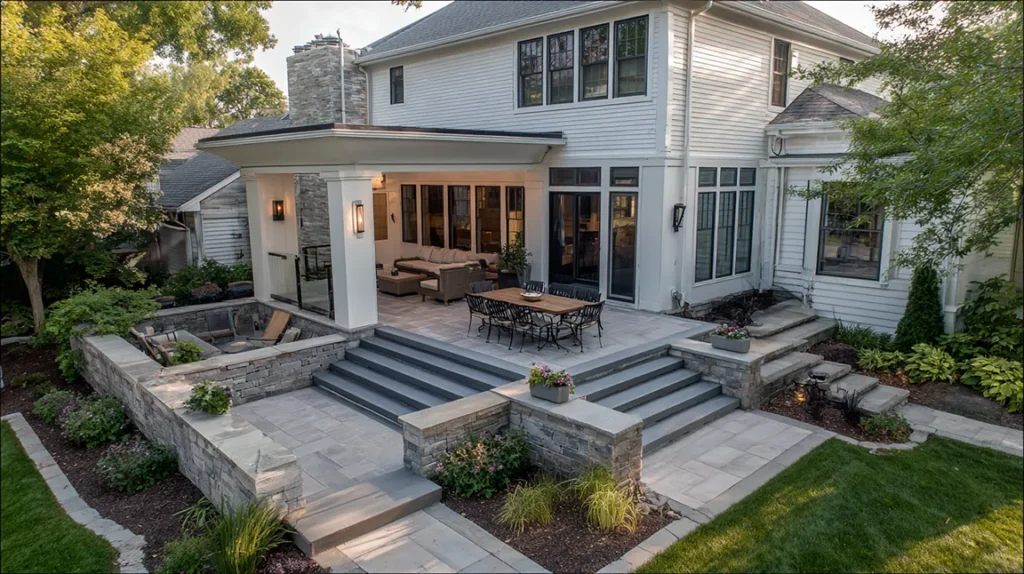
Existing patios often prove too small once you begin using outdoor spaces regularly. Extensions offer practical solutions for adding square footage without starting from scratch.
Match Existing Finishes
When extending stamped concrete, use identical stamps and color formulas. For broom finish or exposed aggregate, replicate the original texture as closely as possible. While perfect matches prove difficult with concrete poured months or years apart, skilled contractors minimize visible differences between old and new sections.
Embrace Contrasting Extensions
Rather than attempting to match existing work exactly, make the addition an intentional design statement:
- Extend broom finish with stamped border sections
- Add smooth modern sections to existing textured areas
- Create visual interest through deliberate contrast
The intentional contrast looks planned rather than patched.
Step-Down Extensions for Slopes
If your existing patio sits level with your home but your yard slopes away, a stepped addition creates usable flat space at a lower elevation. The change in height defines separate activity zones—perhaps dining on the upper level and a fire pit area below.
Wraparound Extensions
Extend the patio along a second side of the home to create L-shaped outdoor living areas. This configuration provides options for different sun exposures throughout the day and creates natural traffic flow between indoor and outdoor spaces.
Stained Concrete Patio Ideas for Color and Character
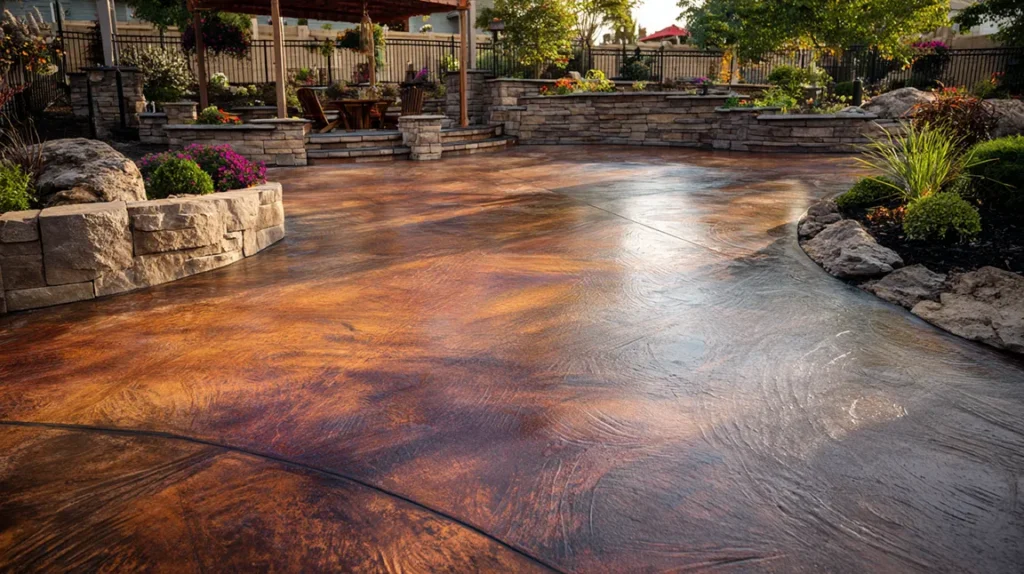
Staining breathes new life into concrete surfaces and offers unlimited color possibilities beyond natural concrete tones. Whether applied to new or existing patios, stains create depth and visual interest that painted surfaces can’t match.
Acid Stains
These produce rich, variegated earth tones through chemical reactions with concrete. Unlike paint that sits on top of the surface, acid stains penetrate and become part of the concrete itself.
Available colors include:
- Amber and terracotta
- Various browns and tans
- Sage green
- Subtle blues
Each application produces unique results because the concrete’s mineral content affects color development.
Water-Based Stains
These offer broader color palettes including blues, grays, and even blacks. Water-based stains provide more predictable, uniform color coverage than acid stains and work well for modern designs requiring consistent tones. Multiple colors can be combined to create custom effects—perhaps a gradient from light to dark or geometric patterns using different hues.
Layered Staining Techniques
Apply a base color across the entire patio, then add secondary colors in strategic areas. The layers interact to create depth similar to aged natural materials. This approach works beautifully when mimicking stone or creating artistic effects.
Border Staining
Stain a contrasting color band around the perimeter of an existing concrete patio to create visual definition. This simple technique adds architectural detail and helps separate the patio from surrounding landscape areas.
Stenciled Patterns
Use adhesive stencils to mask areas before applying stain, creating medallions, borders, or geometric patterns. Remove the stencils to reveal your custom design permanently etched through stain penetration.
The Foundation Matters Most
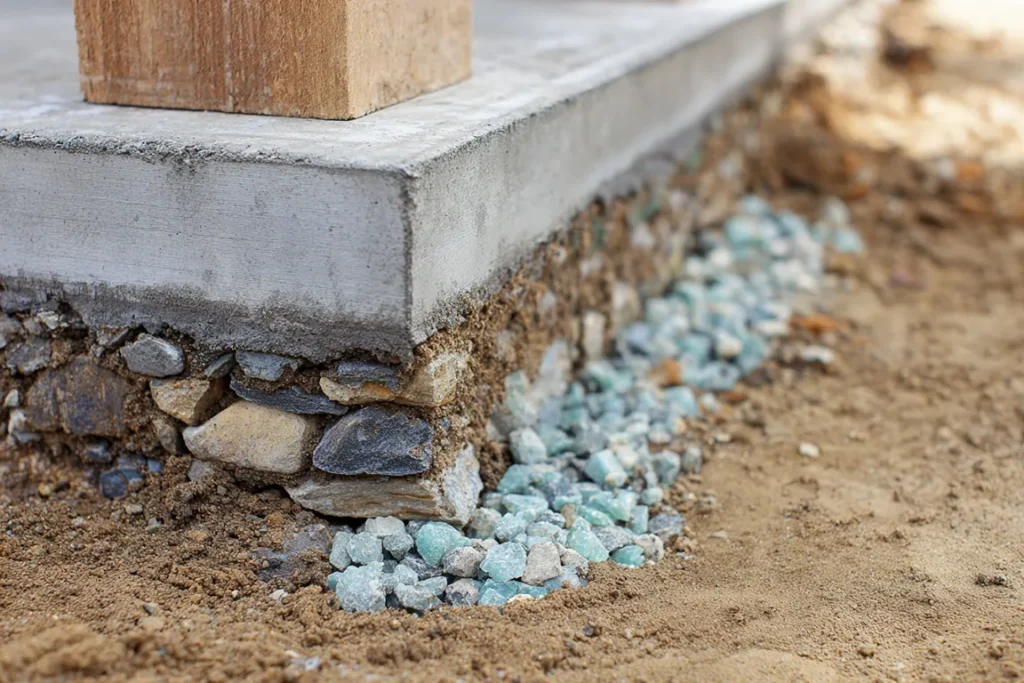
Regardless which concrete patio idea captures your imagination, success depends on what lies beneath the surface. Proper base preparation, adequate reinforcement, and correct concrete mix design determine whether your patio lasts decades or develops problems within years.
Soil Conditions Vary Dramatically
Even within small geographic areas, soil stability changes. Some soils provide stable bases for concrete, while others expand and contract with moisture changes, creating stress that leads to cracking.
Clay soils common in parts of Northern California require special attention:
- Deeper excavation than standard specifications
- Carefully compacted aggregate base materials
- Proper moisture barriers to resist movement
Drainage Design Prevents Problems
Water that pools under concrete slabs creates freeze-thaw damage in winter months, even in moderate climates. Proper grading, adequate slope away from structures, and sometimes underground drainage systems ensure water moves away from your patio rather than undermining it.
Reinforcement Strengthens and Controls Cracking
The right reinforcement appropriate to your specific situation makes all the difference. Fiber mesh reinforcement distributed throughout the concrete mix helps control minor surface cracks. Rebar or wire mesh provides structural reinforcement for larger slabs or areas that will support heavy loads.
The investment in proper reinforcement costs little compared to replacing failed concrete.
Making Your Concrete Patio Decision
With countless options available, how do you choose the right concrete patio style for your space?
Start with Function
Consider how you’ll actually use the outdoor area. A patio designed primarily for quiet morning coffee requires different features than one intended for hosting dinner parties. Function should inform aesthetic choices.
Match Your Architecture
Your home’s style provides design guardrails:
- Modern concrete styles complement contemporary architecture
- Traditional stamped patterns suit older homes
- Rustic textures work with cabin-style properties
Work with your home’s existing character rather than against it.
Consider Climate and Maintenance
Some finishes require more ongoing care than others. Polished concrete needs periodic resealing. Exposed aggregate benefits from occasional power washing to maintain its appearance.
Be honest about whether you’re willing to perform regular maintenance or prefer install-and-forget options.
Think Long-Term Value
Budget realities shape decisions but shouldn’t limit quality. A smaller patio built right exceeds a larger patio built poorly. Consider long-term value rather than just initial cost.
Spending slightly more for proper base preparation and reinforcement prevents expensive repairs years down the road.
Partner with Professionals
The most beautiful design fails if improperly installed. Master tradesmen understand how Northern California’s specific soil conditions, climate patterns, and building requirements affect concrete work. Their experience prevents problems before they occur.
Your Outdoor Living Space Awaits
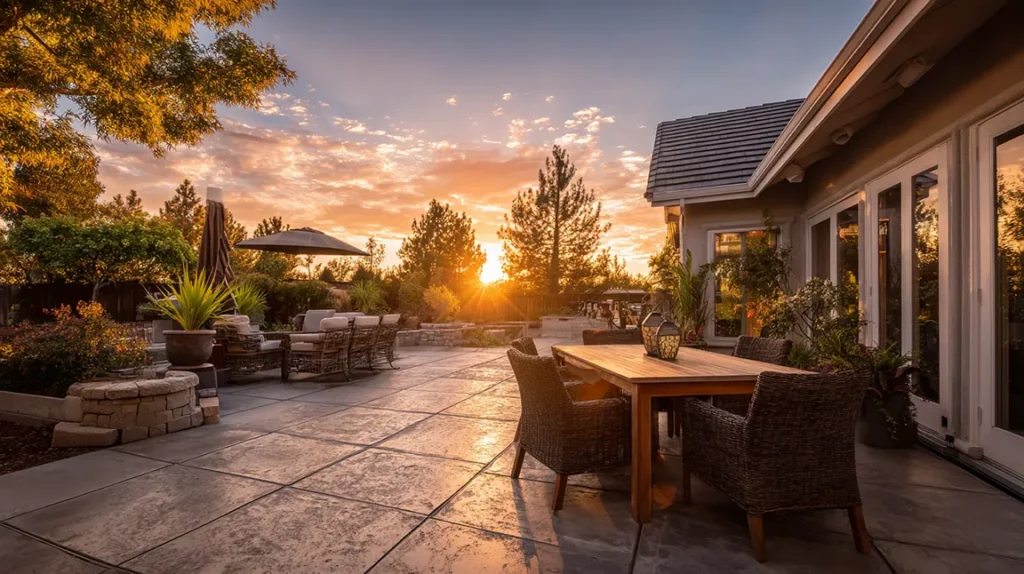
Concrete patios offer virtually unlimited design possibilities to match any aesthetic, budget, or functional requirement. From elaborate stamped patterns that mimic natural materials to clean modern pours that celebrate concrete’s inherent beauty, the right option exists for your space.
The difference between outdoor living areas you’ll enjoy for decades and those that become maintenance headaches comes down to proper planning and skilled execution.
Understanding your options represents the first step. Partnering with experienced professionals who view each project as an opportunity to build lasting value ensures success.
Ready to transform your outdoor space with a concrete patio that matches your vision and exceeds your expectations?
Noble Cortes General Engineering brings comprehensive capabilities, master tradesmen, and commitment to enduring quality to every residential project across Northern California.
Schedule your consultation with NCGE and start creating the outdoor living space your home deserves.
