
Culvert Repair & Replacement in Northern California
Culverts handle one of the most critical infrastructure functions on rural and suburban properties—allowing water to flow under driveways, roads, and embankments without creating flooding or erosion. When they fail, the consequences range from impassable driveways to washed-out roads and downstream property damage. Most property owners don’t think about their culverts until water starts overtopping driveways or erosion threatens road stability.
A properly functioning drainage system with adequate culverts manages water flow across property boundaries and under access routes. Failed or undersized culverts create bottlenecks that back up water, cause flooding, and eventually wash out the very roads and driveways they cross under. The difference between infrastructure that handles Northern California’s wet winters versus failure during the first heavy storm often comes down to culvert sizing and installation quality.
Understanding Culvert Infrastructure
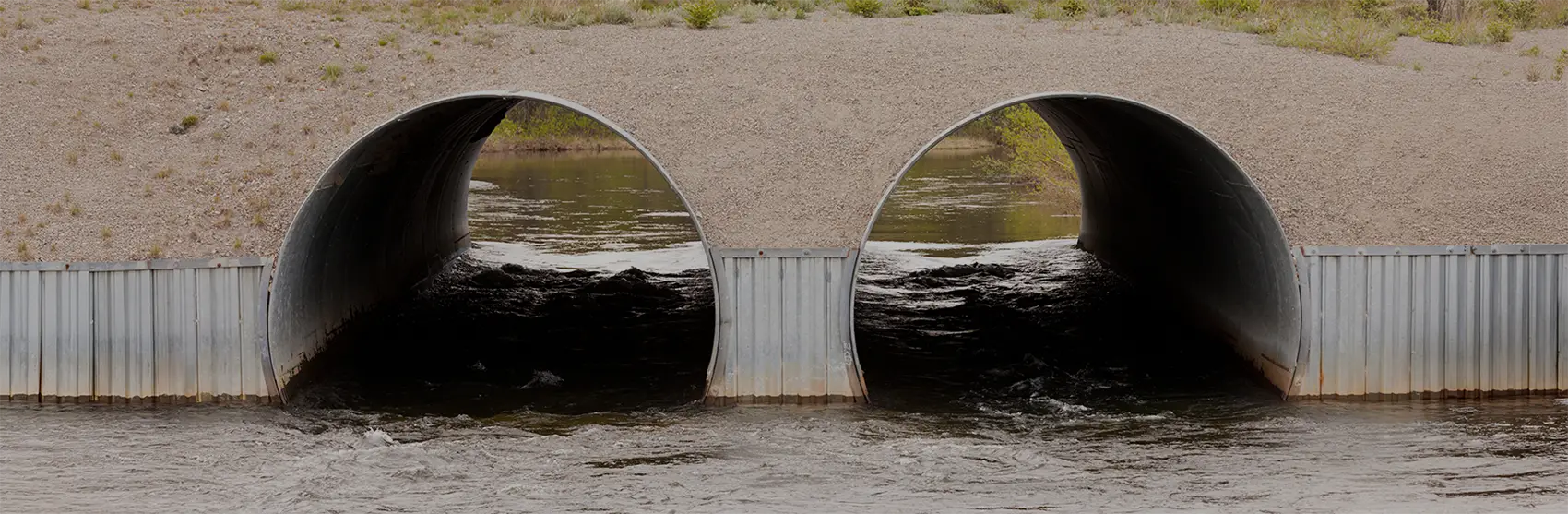
Culverts are pipes or structures that channel water under roads, driveways, trails, or embankments. They maintain natural drainage patterns while allowing access and development across water flow paths. Without culverts, every seasonal creek, drainage swale, or runoff channel would require a bridge or would simply wash out access routes during storms.
Most residential and rural properties use corrugated metal pipe (CMP) or reinforced concrete pipe (RCP) culverts. These range from 12-inch diameter for minor drainage to 48-inch or larger for significant water flow. The size depends on the watershed area draining through the crossing point and peak flow volumes during storm events.
Proper culvert function requires more than just the pipe. Headwalls or endwalls protect the soil around inlet and outlet ends. Adequate slope ensures water flows through rather than backing up. Proper bedding and backfill prevent pipe crushing or settling. Erosion control at outlets prevents downstream damage from concentrated flow.
Common Culvert Problems
Undersized culverts can’t handle peak flow volumes. Many older culverts were installed based on minimal cost rather than proper hydrologic analysis. During heavy storms, water overtops driveways, floods upstream areas, and eventually washes around the culvert creating road failures.
Rust and corrosion eventually destroy metal culverts. Corrugated metal pipe, while economical, has limited lifespan in continuously wet conditions. Rusted sections collapse, reducing flow capacity and creating structural voids that allow road or driveway material to collapse into the pipe.
Signs indicating culvert failure or inadequacy:
- Water overtopping driveways during moderate storms
- Erosion around inlet or outlet ends
- Visible rust holes or collapsed sections in metal pipe
- Standing water upstream of culverts
- Road or driveway settling over culvert locations
- Debris accumulation blocking flow
Sediment accumulation gradually reduces culvert capacity. Culverts installed without proper inlet protection collect leaves, branches, and sediment that partially or completely block flow. Even correctly sized culverts fail when clogged.
Improper slope prevents adequate drainage. Culverts installed too flat don’t maintain flow velocity needed to move sediment through. Those with reverse slope trap water and sediment, eventually failing completely.
Repair vs. Replacement Decisions
Minor damage sometimes allows repair. Small rust holes in metal culverts can be patched if the overall pipe integrity remains sound. Inlet or outlet damage may be repairable without replacing the entire culvert. Debris removal and erosion control may restore function to culverts with adequate capacity.
Complete replacement becomes necessary when structural integrity is compromised. Collapsed sections, extensive rust, or crushed pipe can’t be effectively repaired. Undersized culverts require replacement with larger diameter pipe regardless of condition. Failed installations with improper slope need complete removal and reinstallation.
The decision factors include remaining culvert lifespan, cost-effectiveness of repairs versus replacement, and whether the existing culvert adequately handles design flows. Patching a rusted culvert that’s undersized wastes money compared to proper replacement.
Our Culvert Repair & Replacement Process
Culvert work requires significant excavation, proper pipe handling, and attention to drainage engineering principles. Our excavation expertise and infrastructure experience ensures installations that function properly for decades.
Hydrologic Assessment
We evaluate watershed area, expected flow volumes, and determine appropriate culvert sizing. Undersized culverts fail. Oversized ones waste money. Proper analysis ensures adequate capacity for actual conditions.
Strategic Excavation
We excavate to required depth while maintaining access when possible. Projects may require temporary crossing provisions during construction. Excavation extends beyond the pipe to allow proper bedding installation.
Proper Bedding and Pipe Installation
We prepare compacted base or gravel bedding that supports the pipe throughout its length. The pipe installs at proper slope—typically minimum 2% but sometimes steeper for effective drainage and sediment transport.
Endwall Construction
We install headwalls or endwalls as needed to protect soil around pipe ends, prevent erosion, and maintain structural stability. Concrete or masonry endwalls provide long-term protection for the installation.
Systematic Backfilling
We backfill around and over the pipe in controlled lifts with proper compaction. This prevents pipe crushing, maintains alignment, and supports overlying road or driveway materials.
Erosion Control and Outlet Protection
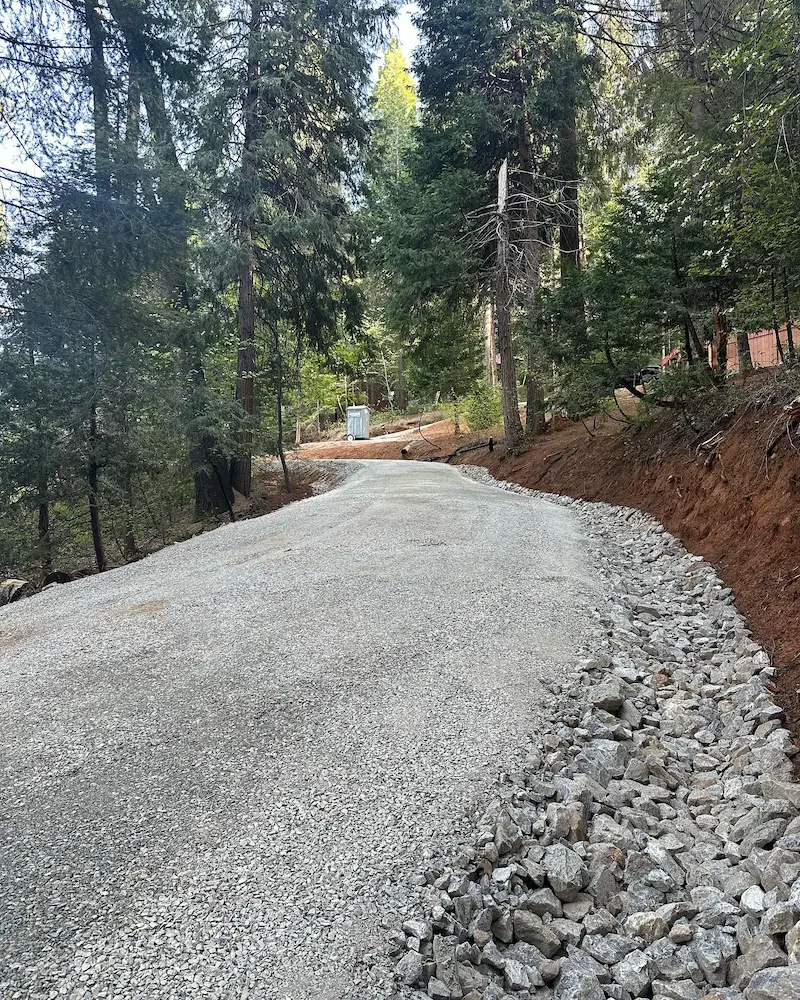
We install riprap or other erosion control at culvert outlets to prevent downstream damage from concentrated flow. This protects both the installation and downstream property.
Material selection depends on site conditions, expected lifespan, and budget. Reinforced concrete pipe offers the longest service life. HDPE pipe provides corrosion resistance. Corrugated metal pipe remains economical for appropriate applications.
Municipal and Private Road Culverts
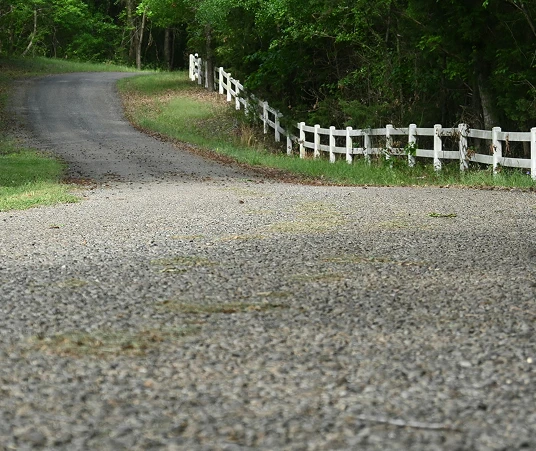
Public road culverts require coordination with local agencies and compliance with their specifications. We handle permitting, meet prevailing wage requirements when applicable, and ensure installations meet jurisdictional standards.
Private road and driveway culverts still require proper engineering even without formal oversight. Inadequate culverts create liability when failures impact downstream properties or public roads. We size and install private culverts to the same standards as public infrastructure.
Shared access roads require agreement among property owners regarding culvert maintenance and replacement responsibility. We can work with multiple property owners or homeowner associations on shared infrastructure projects.
Northern California Service Area Expertise
Our culvert repair experience extends throughout El Dorado, Sacramento, Placer, and Amador counties. Regional conditions significantly affect culvert requirements and performance.
Foothill properties face seasonal creeks and concentrated runoff from steep terrain. These conditions require careful culvert sizing for peak flows that may occur only during major storms. Undersizing by even one pipe diameter can mean the difference between adequate function and failure.
Valley properties with flatter grades require attention to culvert slope and outlet conditions. Insufficient grade prevents proper flow. Flat outlet areas may need extended outfall structures or energy dissipation features.
Clay soils common in valley areas affect both excavation methods and backfill techniques. Proper compaction becomes more critical to prevent settling and maintain pipe alignment over time.
Investment in Critical Infrastructure
Culvert failures create expenses far exceeding replacement costs. Washed-out driveways require complete reconstruction. Failed road sections affect property access. Downstream property damage creates liability exposure. Emergency repairs during storm events cost more and result in less permanent solutions than planned replacements.
Professional culvert repair and replacement protects property access and prevents failures that cascade into expensive problems. This is fundamental infrastructure that determines whether your property remains accessible during Northern California’s wet season.
The Noble Cortes Advantage™ for Culvert Projects
Our comprehensive excavation and concrete capabilities mean we handle all aspects of culvert projects. From excavation through pipe installation to endwall construction and final restoration, you work with a single team accountable for complete execution.
Our master tradesmen who’ve installed drainage infrastructure across hundreds of Northern California properties understand culvert sizing, installation techniques, and long-term performance factors. They don’t just drop pipe in a trench—they engineer solutions that function properly for decades.
When culvert work connects with road construction, retaining wall installation, or property drainage systems, our integrated approach prevents coordination problems and ensures all elements work together as designed.
Protect Your Property Access
Contact Noble Cortes General Engineering to schedule your culvert assessment. We’ll evaluate your drainage infrastructure and provide solutions that ensure reliable property access for decades to come.
Professional culvert repair and replacement from Northern California’s premier general engineering specialists—because infrastructure you drive over depends on drainage infrastructure underneath.
