
A finished asphalt surface looks simple — a smooth, black, uniform plane that vehicles roll across without a second thought. That simplicity hides a genuinely involved process, one where the decisions made before the asphalt ever arrives matter more than the paving itself.
Asphalt paving is a sequence of stages, each building on the one before it. Skip a step or rush it, and the finished surface pays for it later in cracks, depressions, and premature failure. Understanding how the process actually works helps property owners recognize quality work when they see it — and spot the shortcuts that lead to trouble.
What is Asphalt Paving?
Asphalt paving is the process of installing a durable pavement surface made from a hot mixture of aggregate — crushed stone, sand, and gravel — bound together with bitumen, a petroleum-based binder. The mixture is produced at high temperature, transported to the site, laid down with a paving machine, and compacted with rollers before it cools.
The result is a flexible, water-resistant surface that handles vehicle traffic, foot traffic, and weather better than most alternatives at its price point. Asphalt paving covers everything from residential driveways to commercial parking lots, public roads, and walking trails, with the specifications adjusted for each application.
How Does Asphalt Paving Work?
The full process moves through a predictable sequence: prepare the site, establish drainage, build a solid base, lay the asphalt in one or more layers, compact it, and let it cool and harden. Each stage sets up the next, and the quality of the finished pavement depends on all of them being done right.
The sections below walk through each stage in the order a real project follows.
Site Preparation and Excavation
Everything starts with the ground. Before any asphalt gets laid, the existing surface — old pavement, grass, or soil — has to be removed and the area excavated to the proper depth. That depth depends on what’s being paved and what the finished surface will need to support.
For a residential driveway, excavation might go down 8 to 12 inches to accommodate the base and asphalt layers. A commercial parking lot or road goes deeper, since it carries heavier loads. The excavated area is then cleared of debris, roots, and any soft or unstable soil that could undermine the pavement from below.
This stage is also where existing problems get addressed. If the soil is poor, if there’s an old drainage issue, or if the ground has settled unevenly, this is the moment to fix it. Paving over a known problem never ends well.
Grading and Drainage
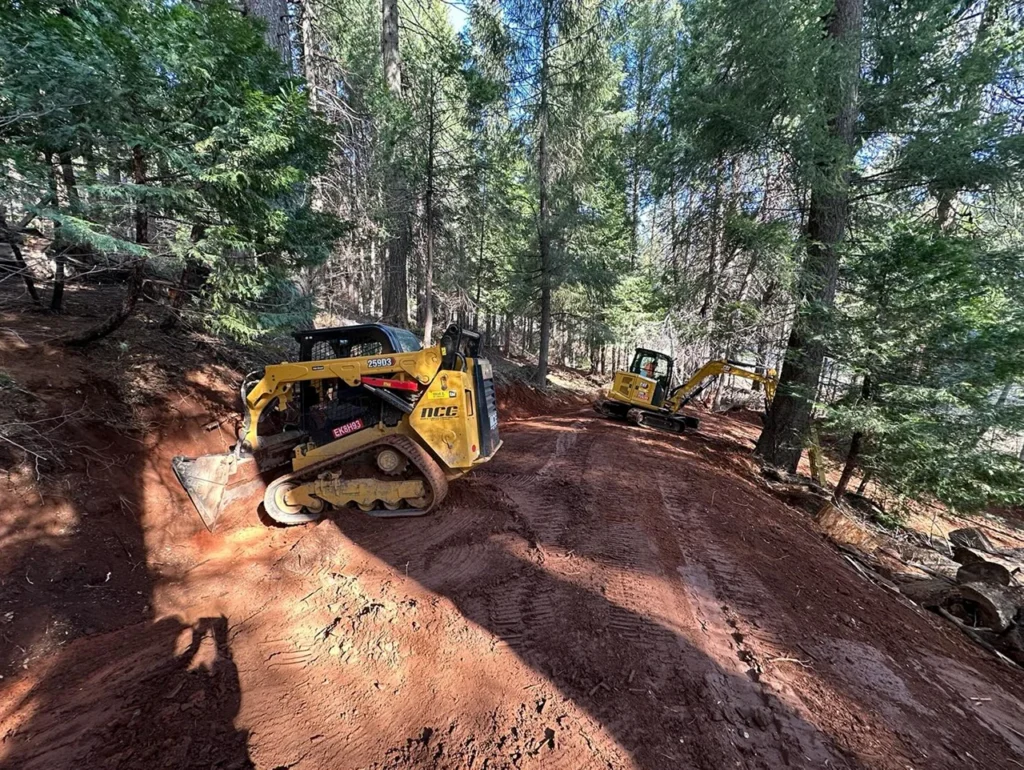
Once the site is excavated, it’s graded — shaped and sloped to direct water away from the finished surface. This is one of the most important stages in the entire process, and one of the easiest to shortchange.
Water is the number one enemy of asphalt. Standing water on the surface accelerates deterioration, and water infiltrating the base washes out the support beneath the pavement, leading to cracking and structural failure. Proper grading ensures water runs off to where it’s supposed to go rather than pooling or seeping into the base.
In our region specifically, grading has to account for the seasonal reality of long dry summers followed by concentrated winter rains. A surface that drains poorly might look fine for months, then reveal its problems the first time a real storm rolls through the Sierra foothills.
Base Installation
With the site graded, the base goes in. The base is a layer of compacted aggregate — usually crushed rock — that sits between the soil and the asphalt. It’s the structural foundation of the entire pavement, and it does most of the work of carrying loads and distributing weight.
A properly installed base is spread in layers, compacted thoroughly, and graded to match the drainage plan. Base thickness varies with the application: a residential driveway might sit on 4 to 8 inches of base, while a commercial parking lot or road needs 6 to 12 inches or more.
The base matters more than almost anything else in the pavement. A thin surface layer over a solid base outperforms a thick surface layer over a weak one every time. When asphalt fails early, a compromised base is usually the reason.
How Many Layers Does Asphalt Paving Require?
Here’s where a lot of people are surprised. Asphalt isn’t always a single layer. Depending on the application, a proper asphalt pavement can consist of two distinct asphalt courses laid on top of the base.
The binder course (or base course) is the lower, coarser layer of asphalt. It’s built for strength, using larger aggregate to provide structural support and bridge the base below.
The surface course (or wearing course) is the top layer — finer, smoother, and designed for the traffic that will roll across it directly. This is the layer that provides the clean finished appearance and the driving surface.
For a residential driveway, a single asphalt layer over a good base is often sufficient. For heavier applications — commercial lots, roads, high-traffic areas — two layers are standard. Whether a project needs one layer or two comes down to the loads it will carry, which is exactly why how many layers an asphalt driveway needs is a question worth asking your contractor before work begins.
Thickness matters as much as layer count. As a general rule, residential surfaces run thinner and commercial or public surfaces run thicker, but how thick the asphalt should be always depends on what’s being paved and how it’ll be used.
Asphalt Placement and Compaction
This is the stage most people picture when they think of paving. The hot mix asphalt is delivered to the site and laid down with a paving machine that spreads it to a consistent depth across the prepared base.
Temperature is everything at this stage. Hot mix asphalt arrives on-site between roughly 275°F and 300°F, and the crew has to place and compact it before it cools too far. Once the mix drops below about 185°F, it becomes too stiff to compact properly — which means the window to get it right is genuinely narrow. This is why paving crews move quickly and deliberately once the material hits the ground.
Compaction follows immediately. Heavy rollers pass over the fresh asphalt to press out air pockets and lock the aggregate into a dense, durable surface. Proper compaction is what gives asphalt its strength and longevity; under-compacted asphalt stays porous, holds water, and fails early. The rolling has to happen while the material is still hot enough to move, which ties the whole stage back to that temperature window.
How Long Does Asphalt Take to Cure?
Asphalt doesn’t cure the way concrete does. Concrete undergoes a chemical reaction as it hardens; asphalt simply cools and gradually stiffens as the bitumen sets and oxidizes. Because of that difference, the timeline works in stages.
The initial cooling happens within hours. Fresh asphalt is usually firm enough to walk on within a few hours and ready for vehicle traffic within 24 to 72 hours, depending on temperature and thickness. In the peak of a Northern California summer, high surface temperatures can extend that window, since the asphalt stays soft longer in the heat.
Full hardening takes much longer. Asphalt continues to cure and harden over the following 6 to 12 months as it oxidizes and reaches its final durability. During this period the surface is more vulnerable to scuffing, power steering marks, and indentation from concentrated loads. Knowing how long asphalt takes to cure helps set realistic expectations — the surface is usable quickly but shouldn’t be treated as fully mature for the better part of a year.
Sealcoating a new asphalt surface should wait until this initial curing period has passed, typically 6 to 12 months after installation, so the oils in the fresh pavement can fully set first.
How to Prepare Your Property for an Asphalt Paving Project
A little preparation on the property owner’s side makes the whole project go more smoothly. Before the crew arrives, there are a handful of things worth handling.
- Clear the area of vehicles, portable basketball hoops, planters, and anything else sitting on or near the surface to be paved
- Arrange alternate parking for the duration, since the surface will be unusable during installation and curing
- Communicate access needs — trash pickup, deliveries, and anyone who needs to come and go during the work window
- Flag any known issues like soft spots, drainage problems, or buried utilities and irrigation lines the crew should know about
Knowing how to prepare your property for an asphalt paving project ahead of time prevents day-of surprises and helps the crew work efficiently. The contractor should walk you through anything specific to your site during the estimate.
What Questions Should You Ask Before Hiring an Asphalt Contractor?
Not all asphalt work is equal, and the difference usually comes down to the contractor. Asking the right questions up front separates the operators who do it right from the ones who cut corners on the parts you can’t see.
Some of the most useful questions to ask before hiring an asphalt contractor include how thick the base and asphalt will be, whether the quote includes proper grading and drainage, what compaction equipment they use, whether they’re licensed and insured, and what kind of warranty they stand behind.
A quality contractor answers these directly and specifics. Vague answers, quotes that seem too good to be true, or reluctance to discuss base preparation are all worth paying attention to. The base and drainage are where corners get cut, precisely because they’re invisible once the surface goes down.
Frequently Asked Questions About Asphalt Paving
How hot is asphalt when paving?
Hot mix asphalt is produced at the plant between roughly 275°F and 325°F and arrives on-site between about 275°F and 300°F. It needs to stay above approximately 185°F during compaction, or it becomes too stiff to press into a dense, durable surface.
How long after paving can you drive on asphalt?
Most new asphalt is ready for vehicle traffic within 24 to 72 hours, though waiting longer is better when possible. In hot weather the surface stays soft longer, so giving it extra time before parking heavy vehicles or turning wheels while stationary helps prevent marks and indentations.
How does rain affect asphalt paving?
Rain is a serious problem during paving. Water cools the hot mix too quickly and interferes with compaction, and moisture trapped in the base compromises the bond. Reputable contractors don’t pave in the rain or on a wet base, which is part of why scheduling around Northern California’s wet season matters.
How does winter affect asphalt paving?
Cold ground and air temperatures cause hot mix asphalt to cool too fast for proper compaction. Paving is generally best done when ground temperatures are at least 50°F and rising. In the foothill counties, winter paving windows are limited, which is why most paving work is scheduled for the warmer, drier months.
How much does asphalt paving cost?
Cost depends heavily on the application, size, and site conditions. In the Sacramento region, residential asphalt driveways generally run around $5 to $9 per square foot installed, while commercial parking lot paving typically runs $3 to $7 per square foot for standard specifications. Site prep, drainage work, and pavement thickness all move the final number.
How long does asphalt paving last?
A properly installed and maintained asphalt surface generally lasts 15 to 25 years in our region, and often longer with consistent sealcoating and prompt crack repair. Installation quality and maintenance discipline matter more than any other factor in how long the pavement holds up.
Who invented asphalt paving?
Natural asphalt has been used as a building material for thousands of years, but modern asphalt paving traces to the late 19th century. Belgian-born chemist Edward de Smedt developed and patented a modern asphalt pavement in the United States in the 1870s, and the first such pavements were laid in Newark, New Jersey, and Washington, D.C. shortly after.
Working With the Right Asphalt Paving Contractor
Good asphalt paving is the sum of its stages — thorough site prep, careful grading and drainage, a solid base, proper layer thickness, disciplined compaction, and enough patience to let the surface cure. Get all of those right and the pavement performs for decades. Cut a corner on any of them and the surface reveals it sooner than anyone would like.
Noble Cortes General Engineering handles asphalt paving projects from start to finish for residential, commercial, and public clients across El Dorado, Sacramento, Placer, and Amador counties. Contact us today for a free quote on your asphalt paving project.
