
Asphalt is everywhere. It’s under your tires on the morning commute, beneath your feet at the grocery store, and probably leading right up to your front door. Yet most people only think about asphalt when something goes wrong — a pothole opens up, a driveway starts crumbling, or a parking lot turns into a patchwork of repairs.
Asphalt is one of the most cost-effective and durable surfacing materials available, but only when it’s installed correctly and maintained on a sensible schedule. Skip either of those, and a 25-year surface can fail in 7.
What is Asphalt?
Asphalt is a paving material made by combining a sticky black binder with stone, sand, and gravel. Once installed and compacted, it forms a smooth, durable surface that holds up well under vehicle traffic, foot traffic, and weather.
The material has been used for road construction for well over a century, and today it accounts for the vast majority of paved surfaces in the United States. Roads, highways, parking lots, driveways, airport runways, walking trails, and even some sports surfaces all rely on it. Part of the reason for its dominance is flexibility — asphalt can absorb minor ground movement and temperature changes without cracking the way rigid surfaces tend to.
What is Asphalt Made Of?
Asphalt is roughly 95 percent aggregate and 5 percent bitumen by weight, though the ratio shifts depending on the mix design and intended use.
The aggregate portion includes crushed stone, sand, and gravel of varying sizes. Aggregate provides the structural backbone of the pavement, carrying the load of vehicles and resisting wear. Larger stones handle the heavy lifting structurally, while finer particles fill in gaps and create a smoother surface.
Bitumen is the binder that holds everything together. It’s a thick, dark, petroleum-based product that becomes pliable when heated and rigid when cool. During installation, bitumen is heated to a workable temperature, mixed with the aggregate, laid down, and compacted before it cools. Once it sets, the bitumen locks the aggregate in place and gives the pavement its characteristic black color.
Different mix designs adjust the size and proportion of aggregate and the type of bitumen to suit specific applications. A driveway mix, a highway mix, and a parking lot mix all share the same basic ingredients but are formulated to handle different loads, temperatures, and traffic patterns.
Asphalt Paving
The finished pavement is what most people see, but the work that determines how long an asphalt surface lasts happens before the first truckload of hot mix arrives. A good asphalt paving project follows a clear sequence:
- Site preparation and excavation. The existing surface or soil is removed to the proper depth based on the load the finished pavement will need to carry.
- Grading and drainage. The subgrade gets shaped to direct water away from the surface. Standing water is the single biggest enemy of asphalt longevity.
- Base installation. A compacted aggregate base is laid down to support the asphalt above it. Thickness varies — a residential driveway needs less than a commercial parking lot or a public road.
- Asphalt placement and compaction. Hot mix gets laid down at the right temperature, then compacted with rollers to remove air voids and lock the material in place.
Cutting corners on any of these steps tends to show up later as cracking, depressions, or premature failure. The visible top layer matters, but the layers below it are what actually determine how long the pavement holds up.
Asphalt Maintenance
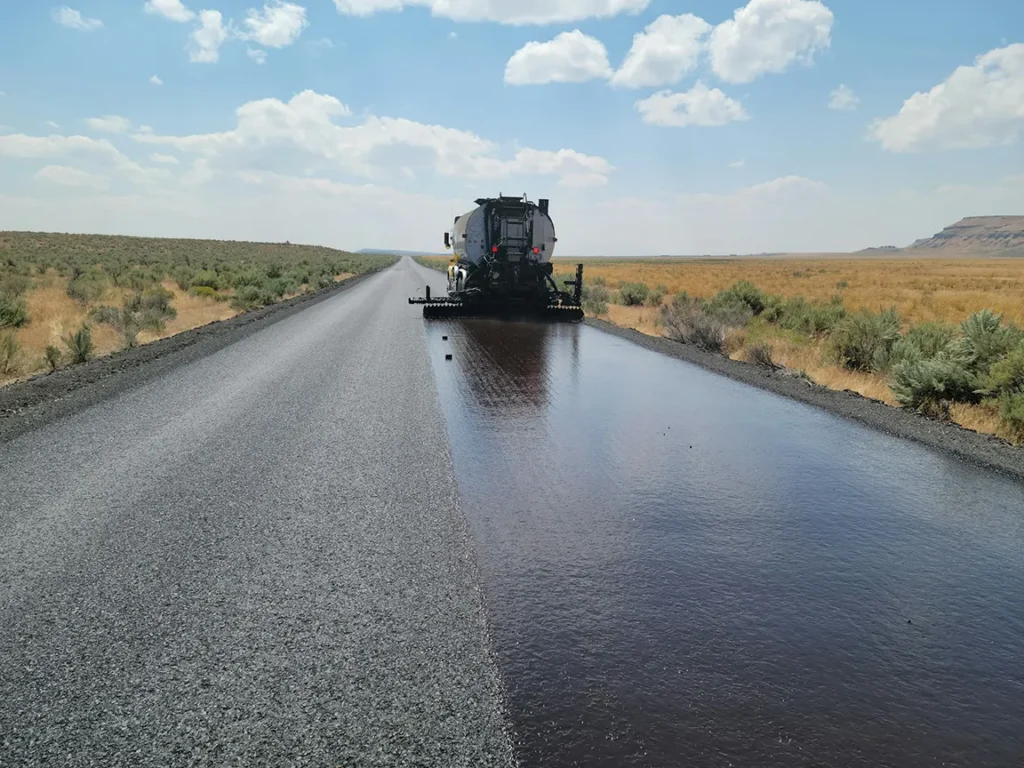
This is where asphalt economics tilt in the property owner’s favor. Sealcoating a driveway every few years costs a fraction of replacing it, and well-maintained asphalt can easily double its expected lifespan.
The two most common asphalt maintenance practices are sealcoating and crack filling. Sealcoating applies a protective layer that shields the pavement from UV rays, oil leaks, and water infiltration. Crack filling does exactly what it sounds like — sealing small cracks before water gets underneath and undermines the base.
Most asphalt surfaces benefit from sealcoating every 2 to 4 years, depending on traffic and exposure. Cracks should be filled as they appear, ideally before winter sets in. Oil and gas spills should be cleaned up promptly, since petroleum products break down bitumen on contact. Commercial properties also benefit from a professional inspection every few years to catch problems before they spread.
Skip maintenance, and small problems compound. Water gets into a hairline crack, freezes, expands, and turns a $50 fix into a $5,000 one.
Asphalt Repair
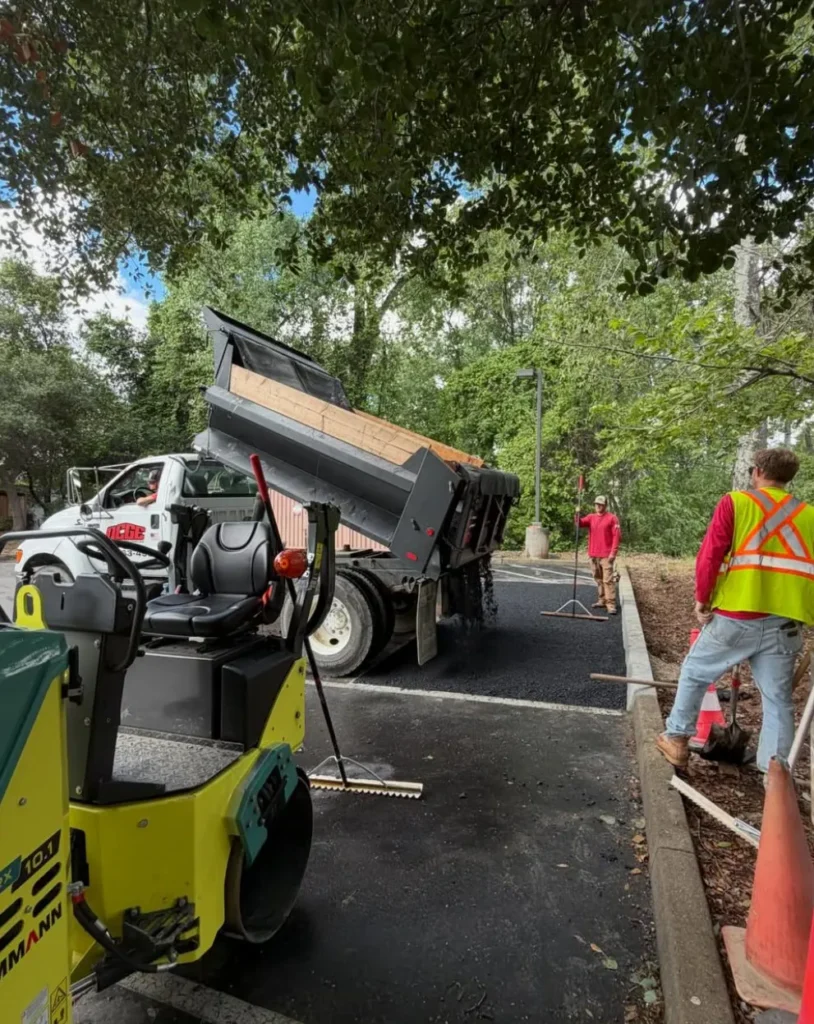
Even well-maintained pavement eventually develops issues. Effective asphalt repair comes down to catching problems early and matching the repair method to the type of damage.
Pothole repair typically involves cutting out the damaged section, cleaning the area, and patching with new hot mix or cold patch material. Cold patches are quicker and useful for emergency fixes, but hot mix repairs hold up significantly longer.
Crack repair ranges from simple sealing of hairline cracks to full-depth patching for larger structural cracks. Alligator cracking — that interconnected pattern that resembles reptile skin — usually signals a deeper base problem that surface patching alone won’t solve.
Surface treatments like overlays and mill-and-fill can extend the life of pavement that’s structurally sound but cosmetically rough. An overlay places fresh asphalt over the existing surface. Mill-and-fill removes the worn top layer and replaces it, which gives a better long-term result for surfaces showing more wear.
The common mistake property owners make is waiting too long. A small crack repaired this year is a routine maintenance item. The same crack ignored for three winters is a structural problem.
Asphalt Replacement
Repair has its limits. At some point, a pavement reaches the end of its useful life, and continuing to patch it becomes throwing good money after bad. Asphalt replacement becomes the better option when repairs can no longer keep pace with deterioration.
Signs that point toward asphalt replacement rather than continued repair include widespread alligator cracking, multiple potholes, drainage failures, and a surface that’s deteriorating faster than maintenance can address. Age matters too. Most asphalt installations are designed for a 15 to 30-year lifespan, and once a pavement is well past that mark, replacement is usually the smarter long-term investment.
Full asphalt replacement involves removing the existing pavement, often re-evaluating the base, addressing any drainage issues that contributed to failure, and starting the paving process over. The upfront cost is higher than repair, but it resets the clock and addresses underlying problems that surface treatments can’t reach.
A good contractor will be straightforward about which path makes sense. If repair will get a property owner another 5 to 10 years for a fraction of replacement cost, that’s the call. If projected repair costs over the next two years approach the cost of replacement, replacement is almost always the better move.
Asphalt Driveways
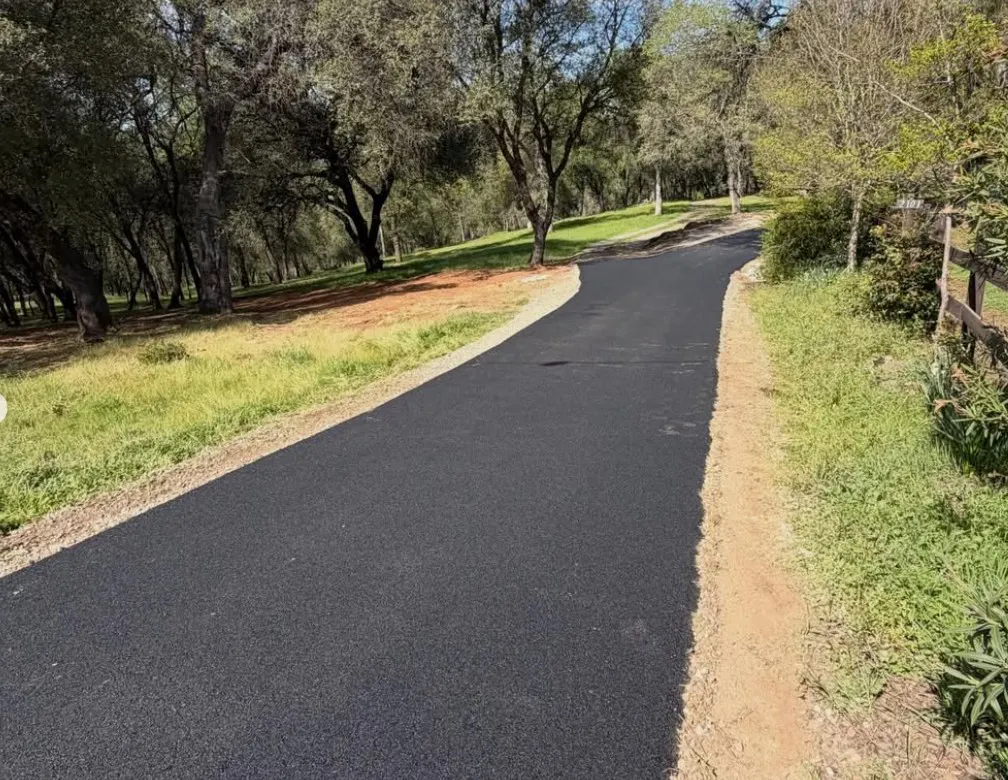
For most homeowners, the driveway is the first introduction to asphalt as a buying decision. Asphalt driveways offer a few clear advantages over concrete: they’re typically less expensive upfront, more forgiving in cold weather, and easier to repair when damage occurs.
A residential asphalt driveway is generally laid at 2 to 3 inches of asphalt over a 4 to 8-inch aggregate base. Properly installed, it should give 15 to 20 years before major work is needed, longer with consistent maintenance. Heavy vehicles parked in the same spot, sharp wheel turning while stationary, and poor drainage are the usual culprits behind early failure.
Curb appeal is part of the equation too. A clean, smooth driveway shapes the first impression of a home, while a cracked, faded one drags down the rest of the property’s appearance regardless of how well-kept the house is.
Asphalt Parking Lots
Commercial parking lots face very different demands than residential driveways. Higher traffic volumes, heavier vehicles, more concentrated load points where vehicles repeatedly park in the same spots, and aesthetic standards that affect how customers perceive a property all factor into the design.
Asphalt parking lot construction typically involves thicker pavement and base layers than residential work, plus careful attention to:
- Drainage and proper slope, since water management is critical at scale
- Striping, signage, and ADA compliance
- Drive lane and parking stall layout for traffic flow
- Curbing, islands, and landscape integration
A well-designed parking lot does more than provide a place to park. It shapes the first impression visitors have of a property and quietly affects tenant satisfaction, customer retention, and long-term property value.
Asphalt Roads
Public roadways are where asphalt earns its reputation as the workhorse of infrastructure. The vast majority of paved roads in the country are asphalt, ranging from rural two-lane routes to multi-lane interstates.
Asphalt roads come with project complexity that goes well beyond the material itself. Traffic control during construction, coordination with utilities, prevailing wage requirements on public projects, strict specifications, and long-term maintenance planning all factor in. The mix designs used for high-traffic roadways are also engineered differently — heavier traffic loads and constant flexing call for more robust formulations than what goes under a residential driveway.
When a public road needs work, the choice between resurfacing, mill-and-fill, and full reconstruction depends on the condition of the existing pavement, the underlying base, and how much traffic the road carries. Each option has its place.
Asphalt Trails
Asphalt is also the standard surface for paved walking, running, and biking trails. The smooth surface works well for pedestrians, cyclists, strollers, wheelchairs, and inline skaters alike, and it can be designed to meet ADA accessibility requirements without difficulty.
Asphalt trails generally don’t need the same heavy-duty base preparation as roads or parking lots, since they’re not carrying vehicle loads. Drainage still matters, though. Standing water on a trail surface causes the same problems it causes anywhere else — cracking, base failure, and shortened lifespan.
The same approach also extends to other low-traffic applications: tennis and basketball courts, school play areas, cart paths on golf courses, and access roads to public facilities. The fundamentals stay the same; the design specifications adjust to the use.
Working With the Right Asphalt Contractor
Whether the project is a new driveway, a parking lot resurface, a public road, or a trail, the same fundamentals decide how long the finished surface lasts: solid base preparation, proper drainage, quality materials, careful installation, and consistent maintenance afterward.
Noble Cortes General Engineering handles asphalt projects of every size across El Dorado, Sacramento, Placer, and Amador counties. Contact us today for a free quote on your next asphalt project.
